
Digital Authentication
The Imperative for Brands Today
Introduction
Trust is not just a feel-good element of brand building—it is the currency that fuels consumer loyalty, repeat purchase, premium pricing, and advocacy. When consumers believe in a brand’s promises—about quality, authenticity, and consistency—they invest not only money but emotional loyalty. Global brands depend on this trust to compete, expand, and sustain margins in increasingly crowded markets.
Components of Trust and Their Fractures
However, today’s consumers increasingly confront multiple trust gaps. Three major vectors threaten brand trust:
1. Counterfeits and Authenticity Loss
- Impact on trust: Counterfeits dilute brand reputation, reduce consumer confidence, and directly impact health/safety in industries like pharma, luxury, and consumer electronics.
- Consumer perception: Customers struggle to distinguish genuine products from fakes, leading to suspicion—even toward legitimate purchases.
- Market Expectation: Customers rely on and expect from both brands and regulators to safeguard their interests through strong product security, proactive brand protection, and effective legal systems that deter the growing threat of counterfeits.
- Compounding counterfeit problem: EU Commission found counterfeits are growing at 77% YOY – Ref.
- Brand’s emotional attachment is suffering: Academic research shows strong emotional attachment to a brand lowers likelihood of consumers turning to counterfeit alternatives; inversely, counterfeit products damage perceptions of quality, involvement, and emotional attachment suffers – Ref.
- 30% consumers risk abandoning the brand: 29.4% wouldn’t buy from the brand again after encountering a counterfeit; 23.6% say they trust the brand less – Private Research.
Counterfeits erode exclusivity, damage brand prestige, and frustrate genuine customers. Research into luxury and premium consumer segments in India shows that when counterfeits proliferate, even loyal, genuine-article consumers may “flight” (leave the brand), “reclaim” (emphasize their status), or “badge down” (adopt plainer brand identifiers) to avoid embarrassment or devaluation – SAFE Journals.
Counterfeit products not only steal revenue but also damage consumer safety and brand reputation, because the consumer often blames the original brand when a fake fails.
2. Consumer data misuse undermines relationships
According to Cisco’s Data Privacy Benchmark Study (2023), over 90% of consumers are concerned about how their data is being used, and 76% say they would not buy from a company they don’t trust with their data. Brands that mishandle consumer interactions lose credibility and forfeit the opportunity to build long-term loyalty.
3. Inconsistent consumer experiences fragment trust
Modern consumers interact with brands across multiple touchpoints—offline stores, e-commerce, social media, and campaigns. However, when these experiences are inconsistent or insecure, consumers question the brand’s integrity. McKinsey research (2023) notes that companies delivering consistent omnichannel experiences retain customers at rates 30% higher than those that do not.
Together, these factors create a widening “trust gap”: brands invest heavily in marketing to win attention but lose credibility at the critical moment of purchase or engagement. Every counterfeit product, every misused data point, every inconsistent touch weakens the currency of trust, directly impacting growth.
Executive Summary
- Core Thesis : Digital authentication isn’t just a security measure—it’s a strategic advantage. It protects products, fuels brand intelligence, simplifies customer experiences, and unlocks exponential value.
- Static holograms, complex security layers, and closed consumer apps belong to the past. Digital authentication isn’t just about stopping fakes—it’s about unlocking intelligence, creating seamless customer journeys, and turning security into a growth strategy.
- Key Highlights:
- Counterfeiting is a real and growing threat.
- Ciphercode’s platform turns each product into a secure, app-less, intelligent touchpoint.
- The outcome: trust, compliance, direct consumer connection, and growth—all at scale.
The Imperative: Why Digital Authentication is the Need of the Hour
• Counterfeits Are Evolving Faster Than Static Security:
- “Anything valuable will be faked.” Products with brand equity are easy targets.
- Brands must move away from static identifiers to encrypted, dynamic ones.
- Traditional holograms, barcodes, and serialization are vulnerable and not user friendly for seamless authentication.
- Digital authentication uses cloud verification with encryption mechanisms – World data today is protected by digital encryption techniques. Individual Digital certificates act as unique identifiers, and AI—not only making duplication exponentially harder but identifying at internet scale for the signals and threats proactively.
• Shifting From Protection to Intelligence
- Authentication isn’t just about proving “real vs fake.”
- Every scan generates data → insights into supply chain, geography, and consumer behaviour.
- This transforms security from a cost centre into a growth driver.
• Consumer Expectations Have Changed to Simplicity & Experience
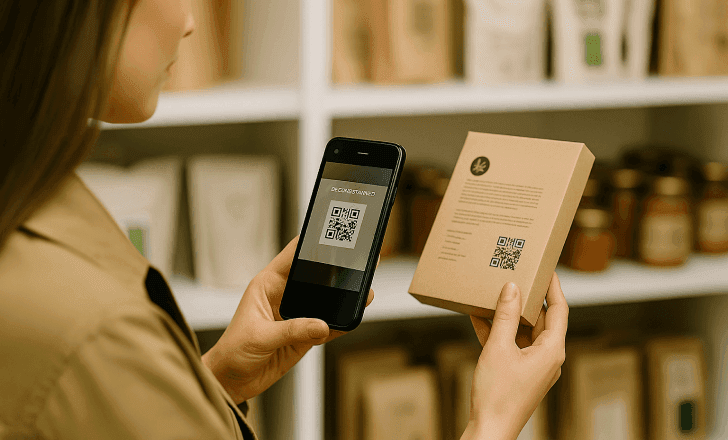
- Customers demand effortless authentication, no apps, no friction, instant, mobile-first, and transparent experiences. “Just a scan away.”
- Instead of closed apps or clunky codes, digital authentication offers frictionless trust at the point of interaction.
- Invisible Security, Visible Verification
• Visibility & Supply Chain Intelligence
- Real-time ground data (e.g. store scans, geo-tags) are essential to detect hotspots of counterfeiting.
• Regulatory & Compliance Pressure
- Global frameworks (EU Digital Product Passport, FDA DSCSA, sustainability mandates) require traceability and transparency.
- Digital solutions future-proof brands against rising compliance demands.
• Omnichannel Vulnerability
- Counterfeiting risk exists both offline and online. A complete solution must span both.
• The Brand - Consumer Disconnect
- Fragmented channels lead to loss of visibility, data, and even influence. Counterfeiters thrive in these gaps.
• Brand Value & Loyalty Program
- Counterfeits don’t just steal sales—they erode reputation and trust.
- Digital authentication builds confidence in brand integrity, especially in high-risk sectors (luxury, pharma, food).
• Scalability & Integration
- Cloud-native authentication integrates with existing CRM, ERP, and supply chain systems.
- Unlike static labels, digital solutions scale globally without redesigning packaging or customer flows.
Ciphercode’s Approach: Protect, Connect and Grow Smart
First Principles
- Effortless, app-less authentication—no dedicated apps or prior security knowledge needed.
- True authenticity through cryptography—encrypt every product using digital certificates.
- Bridge the brand–consumer gap—unify touchpoints across channels and campaigns.
- Staying relevant—adaptable to evolving tech, consumer expectations, and industry contexts.
Three Pillars of Modern Brand Protection
- Regulatory & Compliance: Meets evolving mandates (e.g., EU Digital Product Passport) while being “compliance by design.” Silicon India
- Brand-Led Product Security: Embeds protection at the manufacturing level—authentic products from origin.
- Active Consumer Participation: Involve consumers as the first line of defense and engagement.

Differentiators: What Makes Ciphercode Stand Out
- Patented, scalable cryptographic certificates—offered at production scale, enabling tamper-proof authentication.
- App-less since 2018—no friction for consumers.
- Built-in AI intelligence—transform scans into analytics, insights, and engagement opportunities.
- Seamless integration with packaging, ERP, and supply chain systems; compliant with GS1 and DPP frameworks.
- From Protection to Growth—not just stopping counterfeiters but unlocking loyalty, personalization, and revenue paths.
Benefits & Exponential Business Value
- Trust at the Unit Level: Reliable authentication per SKU—leaving no room for counterfeits.
- Instant ROI: Double- or triple-digit ROI outcomes for brands.
- Rapid Deployment: Implementable in days, not months.
- Direct Consumer Engagement: Use every scan to tell your brand story, offer rewards, collect feedback, and build loyalty.
- Unified Intelligence: Data from every interaction flows into a unified layer, ready for AI-powered insights.
- Scalable & Flexible Growth: Future-proof infrastructure adaptable across industries and regulations.
Real World Impact: Success Stories
- Elmage Personal Care: Over 100,000 products protected, seamless compliance, zero counterfeits.
- DeMoza Fashion: Delivered 160x ROI on consumer campaigns, millions of interactions, full digital adoption.
- CII Institute of Logistics: Achieved zero counterfeit incidents and seamless engagement.
Future Outlook
- A TrustTech Evolution: From reactive protection to proactive engagement and business intelligence.
- In the AI-powered experience economy, Ciphercode empowers brands to maximize ROI, elevate customer experience, and scale globally.
- Aligned with data privacy and regulatory norms—GDPR, DPP, GS1, and beyond.

Conclusion
- Digital authentication powered by cryptography is transformational, not optional.
- Offers product protection, regulatory alignment, consumer engagement, intelligence, and growth.
Act now. Adopt Ciphercode to secure future-proof trust, unlock direct consumer engagement, and expand your brand presence far beyond traditional channels.