
Cost Savings and Revenue Gains from Proven QR Code Marketing Technologies
Find out how reducing waste and optimizing campaigns can increase marketing efficiency.
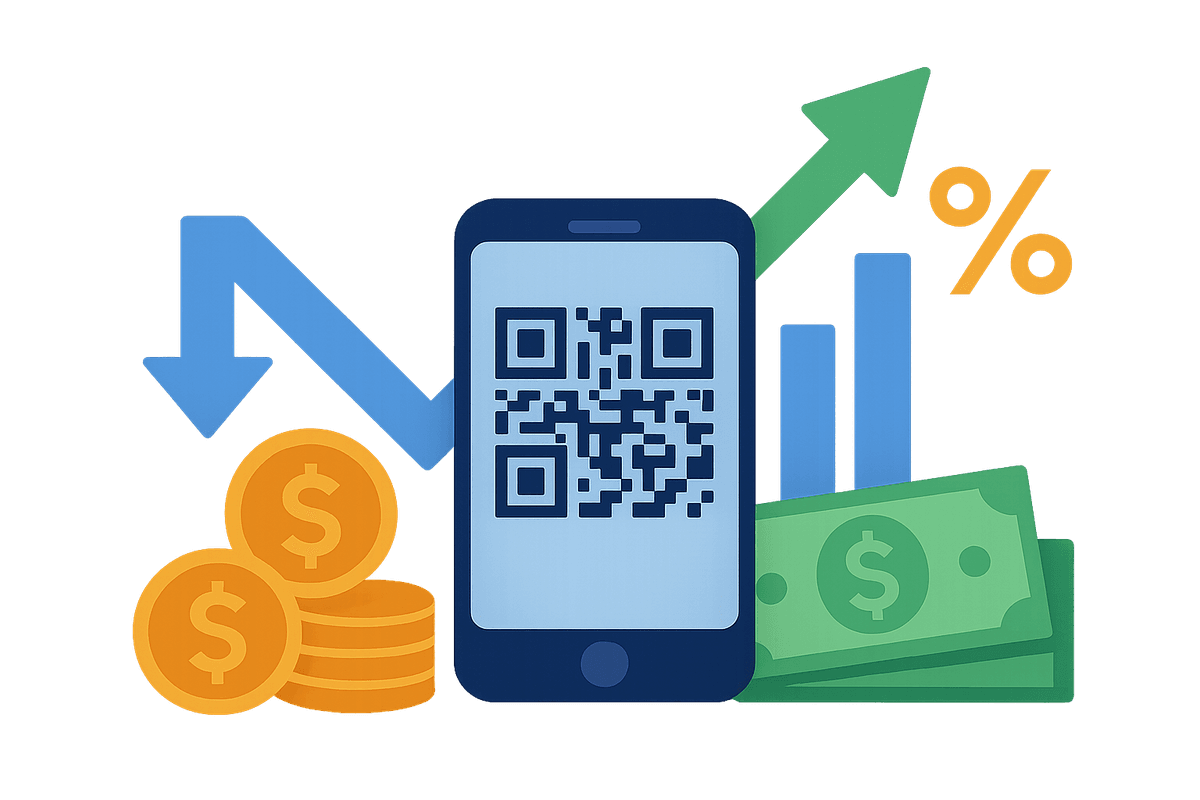
Cost Savings and Revenue Gains from Proven QR Code Marketing Technologies
Find out how reducing waste and optimizing campaigns can increase marketing efficiency.
In today’s competitive market, proving the value of every marketing dollar is essential. For years, marketers have struggled to measure the impact of offline campaigns, but the rise of QR code marketing has changed the game. By bridging the gap between the physical and digital worlds, QR codes offer a powerful way to engage customers, track performance, and ultimately, drive a higher return on investment (ROI). This article explores how adopting QR code technologies can lead to significant cost savings and revenue gains, transforming your marketing efforts from a cost center into a profit driver.
Reducing Waste and Optimizing Campaigns
One of the most immediate benefits of QR code marketing is the ability to reduce waste and optimize campaign spending. Traditional marketing channels often involve significant printing and distribution costs, with little way to track engagement. Dynamic QR codes, however, allow you to update the destination URL without reprinting materials, saving you from costly reprints every time a campaign changes. Imagine you’ve printed thousands of flyers for an event, only to have the details change at the last minute. With a dynamic QR code, you can simply update the linked webpage, ensuring your audience always has the most current information.
This flexibility also extends to A/B testing and campaign optimization. By creating multiple QR codes for different ad placements, you can track which channels are driving the most engagement and conversions. For example, a billboard in a high-traffic area might seem like a great investment, but QR code analytics can reveal whether it’s actually driving website visits or sales. This data-driven approach allows you to reallocate your budget to the most effective channels, maximizing your ROI and eliminating wasteful spending.
Cost Savings in Black and White
The cost savings of QR codes become even more apparent when you look at specific use cases. Take business cards, for example. The average cost of designing, printing, and replacing traditional business cards can be as high as $190 per employee per year. For a company with 500 employees, that’s a staggering $95,000 annually. By switching to digital business cards with QR codes, that cost can be reduced to as little as $1,188 per year, a savings of over 98%.
The savings are just as dramatic when it comes to product manuals and other informational materials. Printing and distributing 25,000 product manuals can cost around $5,000 annually. A simple PDF QR code can deliver the same information for just $60 a year, a 98% reduction in cost. These are not insignificant numbers, and they demonstrate the tangible financial benefits of embracing QR code technology.
Boosting Revenue Through Enhanced Customer Engagement
Beyond cost savings, QR codes are a powerful tool for driving revenue growth. A QR scan is a high-intent action; it’s a deliberate choice by the consumer to engage with your brand. This is why QR-initiated journeys have an average click-through rate of 37%, significantly higher than many other digital channels. Every scan is an opportunity to build a direct relationship with your customers, share your brand story, and drive sales.
Ciphercode, a leader in encrypted QR code technology, has seen its clients achieve impressive results. One client saw a 160x campaign ROI and a significant increase in store footfall by using QR codes to run dynamic campaigns and track social media spend. Another client achieved a 25% increase in immediate sales by using QR codes to direct customers to targeted landing pages. These examples highlight the revenue-generating potential of a well-executed QR code strategy.
The Power of First-Party Data
In an era of increasing data privacy regulations, the value of first-party data cannot be overstated. QR codes provide a seamless way to collect this valuable information directly from your customers, with their consent. A recent report found that 95% of businesses use QR codes to gather first-party data, not in the form of personally identifiable information, but as valuable scan data. This data can be used to understand customer behavior, personalize marketing messages, and build detailed customer profiles.
By integrating QR code data with your CRM and other marketing platforms, you can create a unified view of the customer journey. You can see which offline channels are driving online engagement, track conversions, and even retarget customers with personalized offers. This level of insight is invaluable for building long-term customer relationships and driving repeat business. One Ciphercode client saw a 3x increase in repeat purchases by using the platform’s real-time insights to target and retarget customers effectively.
Unlocking the Full Potential of Your Marketing
The evidence is clear: QR code marketing is no longer a novelty; it’s a proven strategy for driving measurable results. From reducing costs and optimizing campaigns to boosting revenue and collecting valuable first-party data, QR codes offer a wealth of benefits for businesses of all sizes. By embracing this technology, you can unlock the full potential of your marketing efforts, transforming every product and every interaction into an opportunity for growth.
The key to success lies in a strategic approach. It’s not just about slapping a QR code on your marketing materials; it’s about creating a seamless and engaging customer experience. Think about the user journey from the moment they scan the code to the final conversion. What information are you providing? What action do you want them to take? By answering these questions and leveraging the power of dynamic QR codes and data analytics, you can create campaigns that not only capture attention but also deliver a real, measurable return on investment.



Start Your Journey Today
Sign up now and experience the power of True Authentication and Customer Engagement
Request Demo